
LED Lighting
Upgrade your home with high-efficiency smart LED lighting and solar-powered solutions.
Professional Disclaimer!
⚠️ Professional Installation: Recommended products sold by Nextum involve high-voltage electricity and chemical energy storage. Improper installation may result in fire, injury, or system failure. We strongly recommend consulting with a certified electrician or solar specialist before installation.
🔋 Compatibility Check: Always verify voltage matching (e.g., 48V vs. 12V) before connecting components. Nextum is not responsible for damage caused by mismatched inverters, controllers, or batteries.
Nextum Shop provides advanced illumination hardware designed to bridge the gap between industrial energy tech and the modern residential environment.
We understand that lighting is the most consistent load on any electrical system, which is why our collection is engineered for maximum efficiency and technical longevity. Our LED lighting collection is curated for tech-savvy homeowners and DIY enthusiasts who demand high-performance components for their smart homes and off-grid rigs.
We focus on high-efficiency semiconductor technology that provides maximum Lumens per Watt, ensuring your environment remains bright while your energy consumption remains minimal.
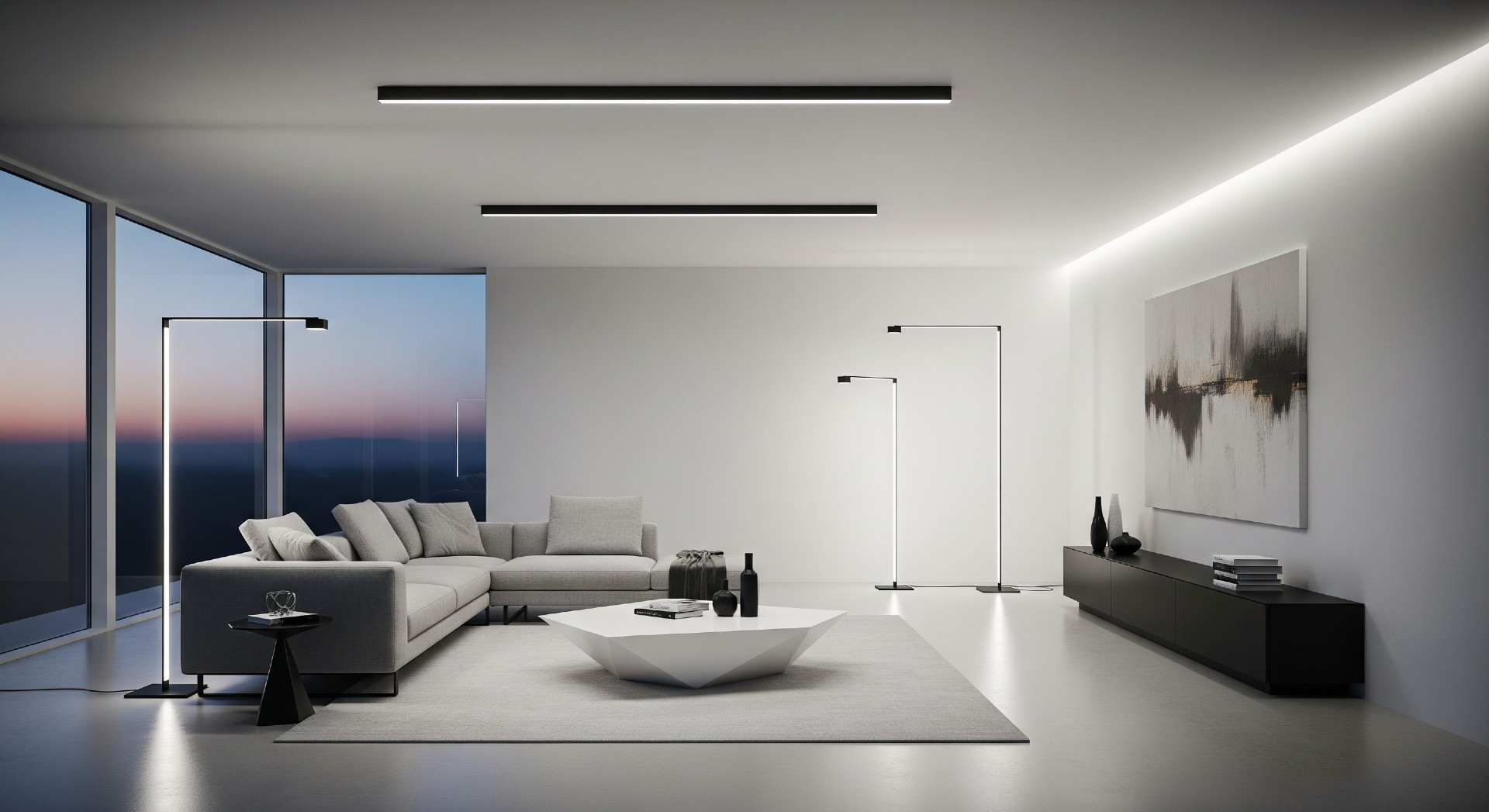
LED Lighting FAQ
What is LED lighting?
LED stands for Light Emitting Diode. Unlike traditional incandescent bulbs that use a vacuum and a filament, or CFLs that use gas, LEDs are solid-state lighting. They produce light by passing an electrical current through a semiconductor material, which then emits photons. This process is significantly more efficient as it generates very little heat, converting nearly all consumed energy into visible light.
Can I use Nextum smart lights with my existing solar setup?
Yes. However, you must match the voltage. If your solar system outputs 12V DC, you cannot screw a 110V AC bulb directly into the circuit. You will need an inverter to convert the 12V battery power to 110V AC. Alternatively, for our self-contained solar lights, no external connection is needed as they have built-in panels and batteries.
How do I calculate how long my battery will run these lights?
You can use the formula: Battery Capacity (Watt-Hours) / Total Load (Watts) = Run Time (Hours). For example, our 12V 100Ah battery provides 1280 Watt-Hours. If you run five 10W smart bulbs (5 x 10W total load), the battery would theoretically power them for roughly 25.6 hours (1280Wh / 50W), assuming no other loads and inverter efficiency losses.
What is the life expectancy of the LED arrays in your smart bulbs?
Our LED components are rated for approximately 25,000 to 50,000 hours of operation. Since LEDs are solid-state lighting, they are much more resistant to vibration than traditional bulbs, which makes them ideal for environments with mechanical movement or near heavy machinery.
Can these lights be used with a dimmer switch?
Most smart LED bulbs, including our E27 camera-integrated models, are not compatible with external hardware dimmers. Dimming is typically handled digitally via the associated smartphone application to ensure the internal camera and WiFi components receive a constant, stable voltage.
Do the solar lighting units work during a power outage?
Yes. Because our solar-powered lights and CL30 systems rely on their own internal batteries and PV panels, they will continue to illuminate your property and record data even if the main municipal grid fails. This makes them a critical component for emergency preparedness.
Why is LED lighting considered superior for off-grid systems?
The primary advantage is the Luminous Efficacy. LEDs can produce the same amount of light as an incandescent bulb while using 80-90% less energy. For a user operating on a battery bank, such as a 12V 100Ah LiFePO4 system, switching to LEDs can extend the run-time of the lighting circuit from a few hours to several days.
How do I choose between 12V and 110V LED lighting?
If you are outfitting a standard home, 110V E27 bulbs are the most convenient. However, if you are building an RV or a van-life rig, we recommend 12V DC lighting to avoid the "conversion loss" of an inverter. Running lights directly from your battery bank is always the most efficient path for energy independence.
What is the importance of the Cycle Count in solar lighting?
The cycle count refers to how many times the internal lithium battery can be charged and discharged before its capacity drops. Our solar units utilize high-quality cells designed to handle daily cycles for several years. Because the LEDs draw so little power, the battery rarely hits a 100% Depth of Discharge (DoD), which further extends the hardware's lifespan.
How does color temperature affect my space?
Color temperature is measured in Kelvin (K). Lower numbers like 2700K-3000K produce a "Warm White" similar to traditional bulbs, while 5000K-6000K produce a "Daylight White." We recommend 5000K for outdoor security and workspace lighting to ensure maximum clarity and technical detail visibility.
Can these LED units handle outdoor environments?
Our integrated solar lighting systems are built with IP65 and IP66 ingress protection ratings. This ensures that the hardware is protected against dust and high-pressure water jets, making them suitable for the varied climates found across the USA, from humid coastal regions to arid deserts.
Advanced E27 LED Hardware and Smart Integration
The core of our lighting selection features high-performance LED arrays utilizing the standard E27 Edison screw base. This universal interface allows for a 3-second upgrade to your existing infrastructure, providing an immediate transition to next-gen lighting technology. We utilize hardware that is designed to operate with a broad voltage tolerance, accommodating the standard American 110V-120V AC grid while maintaining sophisticated internal thermal management to protect the delicate LED dies.
From a technical standpoint, these LEDs are engineered to minimize harmonic distortion and electromagnetic interference (EMI). We offer drivers that ensure a flicker-free experience and consistent color temperature across the entire lifecycle of the bulb. For the early adopter, this means your lighting system is not just an appliance, but a precise piece of energy-efficient hardware. These units are particularly effective when integrated into smart home ecosystems, allowing for precise control over your energy footprint without sacrificing light quality.
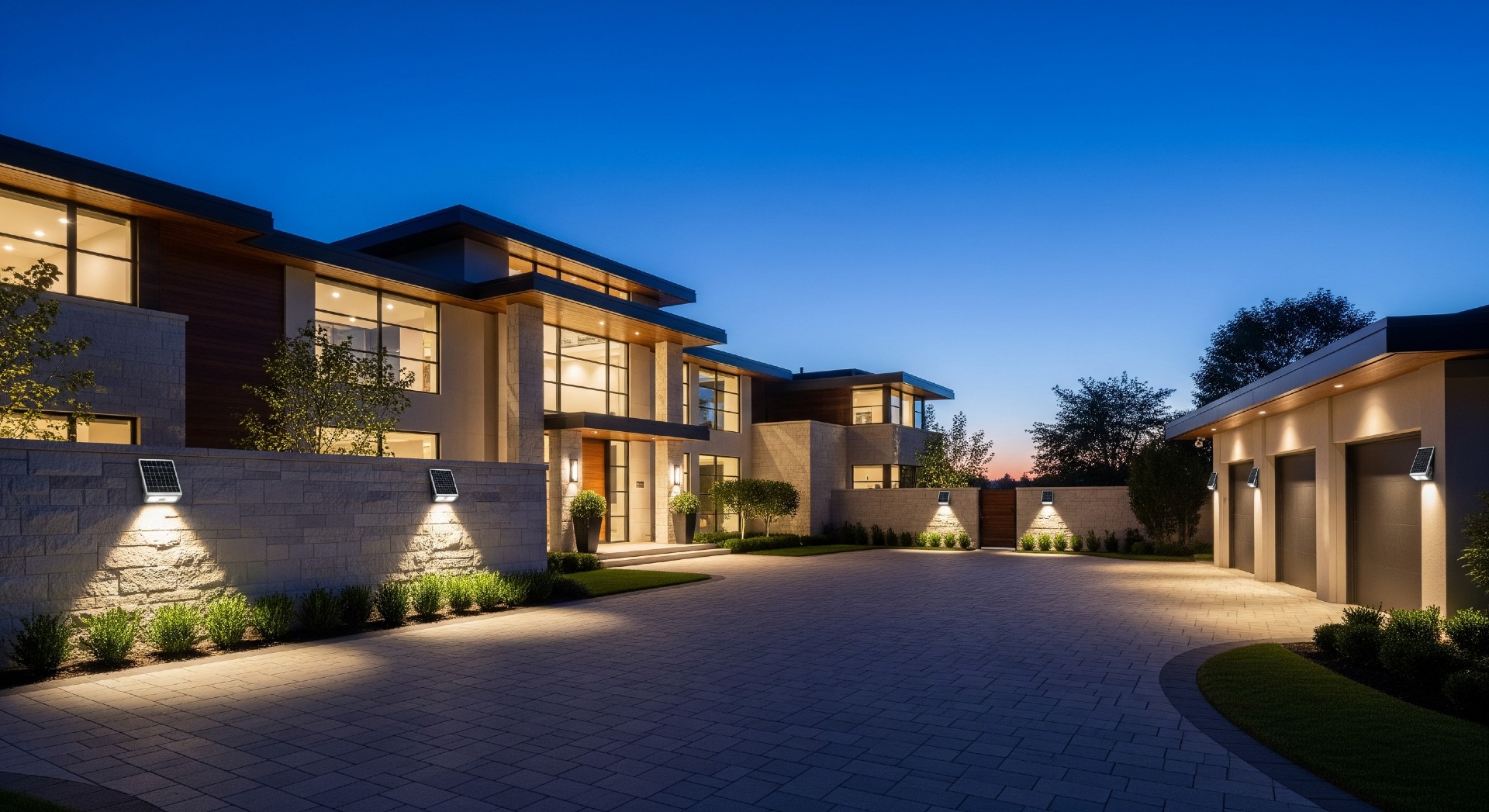
Solar-Powered Illumination and Energy Autonomy
We believe in a future where your lighting is not dependent on the municipal power grid. Our solar-integrated outdoor lighting systems represent the pinnacle of energy independence. These units combine three critical components: high-efficiency photovoltaic panels, integrated lithium-ion chemical storage, and high-intensity LED arrays. By utilizing autonomous power generation, we help you eliminate the need for complex high-voltage wiring in outdoor spaces.
By utilizing low-power standby modes and motion-activated triggers, our solar lighting hardware maximizes the duty cycle of the internal battery. This is particularly vital for DIY solar enthusiasts who need reliable perimeter lighting in remote areas. The internal charge controllers are tuned to the specific discharge curves of lithium chemistry, ensuring the battery remains healthy even through the deep-cycle requirements of winter nights. This level of technical reliability ensures that your property remains illuminated regardless of grid status.
Technical Recommendations for High-Voltage and Off-Grid Systems
To achieve the best performance from your Nextum lighting hardware, we recommend a systems-based approach to installation. Lighting management is crucial for battery longevity, especially in mobile or off-grid applications.
- Inverter Selection: When running our AC-powered E27 LEDs on an off-grid system, we suggest using a Pure Sine Wave Inverter. This prevents the high-frequency oscillation that can occur with modified sine wave units, which often degrades the internal circuitry of high-end LED drivers over time.
- Battery Pairing: For heavy-duty lighting requirements, pair your AC or DC lighting circuits with our 12V 100Ah or 280Ah LiFePO4 batteries. These Grade A cells offer a high cycle count, providing a stable voltage floor that prevents LED dimming as the battery discharges.
- Voltage Matching: If you are building a custom DC lighting rig, ensure your wire gauge is sufficient to prevent voltage drop over long distances. For a 12V system, even a 2V drop can significantly impact the brightness and efficiency of the LED array.