
RGB Lighting
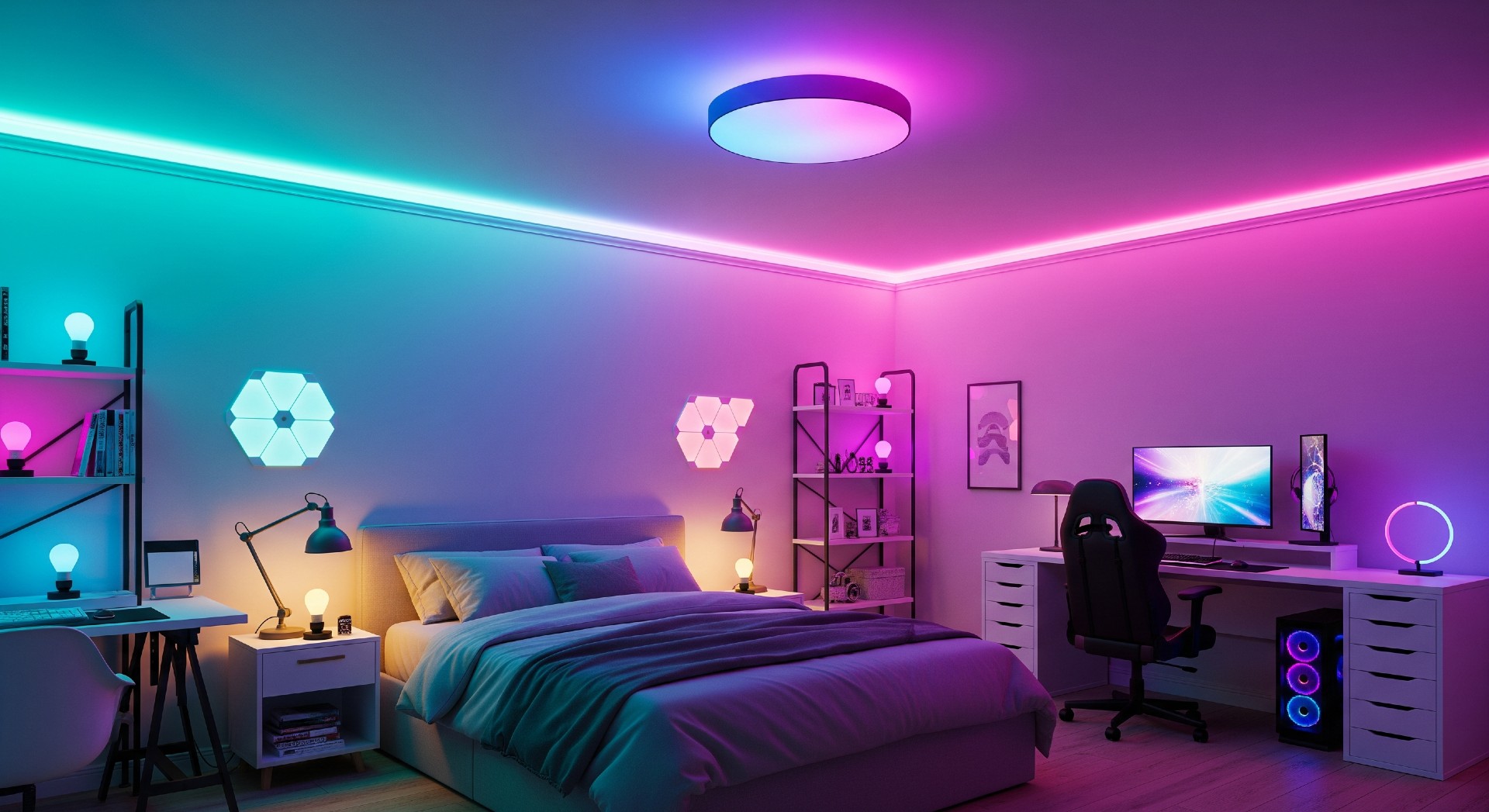
Transform your living environment with next-generation RGB lighting that merges high-efficiency engineering with seamless smart home integration.
Professional Disclaimer!
⚠️ Professional Installation: Recommended products sold by Nextum involve high-voltage electricity and chemical energy storage. Improper installation may result in fire, injury, or system failure. We strongly recommend consulting with a certified electrician or solar specialist before installation.
🔋 Compatibility Check: Always verify voltage matching (e.g., 48V vs. 12V) before connecting components. Nextum is not responsible for damage caused by mismatched inverters, controllers, or batteries.
Nextum Shop provides a curated selection of RGB lighting hardware designed for those who demand more than just aesthetic appeal. We focus on industrial-grade components, including high-density LED neon strips, smart bulbs with superior color rendering indexes, and USB-powered modules optimized for low-energy consumption.
These systems are engineered to function within modern energy-efficient homes and off-grid setups, offering both the “cool factor” and technical reliability.
We offer these solutions with fast and free shipping across the USA, ensuring your transition to a smarter, more vibrant home is efficient and cost-effective.
RGB Lighting FAQ
What is RGB lighting?
RGB lighting refers to hardware that utilizes Red, Green, and Blue light-emitting diodes to create a vast spectrum of colors. By varying the intensity (voltage/PWM) of each individual diode, the system can produce over 16 million color combinations. In a professional setup, these are often managed by a microcontroller or a smart hub that sends precise signals to the hardware to define specific hues and brightness levels.
What is the advantage of 24V RGB strips over 12V?
The primary advantage is the reduction in voltage drop. 24V systems carry half the current (Amperage) of a 12V system for the same wattage output. This means you can run longer continuous lengths of LED tape without the light dimming toward the end, and you can safely use thinner gauge wiring over longer distances.
Can I power these lights directly from my solar battery?
Yes, but we recommend using a voltage stabilizer or a high-quality DC-to-DC regulator. While a 12V battery is labeled "12V," its actual output can fluctuate between 11.5V and 14.6V depending on the charge state. Standard LED strips are engineered for a narrow voltage range; over-voltage can lead to thermal runaway and significantly shorten their lifespan.
How do I choose the right controller for my RGB setup?
You must match the controller to the specific data protocol of your LEDs. Standard RGB strips use a 4-pin connection (12V+, R, G, B) and require a PWM controller. Addressable RGB (ARGB) strips use a 3-pin connection (5V/12V, Data, Ground) and require a digital controller capable of sending serial data signals to the integrated circuit (IC) chips on the strip.
What does the "CRI" rating mean for smart bulbs?
CRI stands for Color Rendering Index. A higher CRI (above 90) indicates that the light accurately reflects the true colors of objects, much like natural sunlight. Cheap RGB bulbs often have poor CRI, making skin tones and decor look "flat" or greenish. Nextum Shop selects high-CRI LEDs to ensure your living space remains vibrant and natural.
Are USB-powered RGB lights efficient for permanent installation?
USB-powered lights are excellent for localized task lighting, such as under-cabinet accents or desk setups. Because they operate at 5V, they are limited in both length and maximum luminosity due to the current limits of USB ports (typically 0.5A to 2.1A). For architectural or whole-room lighting, we suggest 12V or 24V systems for consistent, high-output performance.
Should I wire my LED strips in series or parallel?
For systems exceeding 5 meters (16.4ft), we strongly recommend parallel wiring. Running multiple strips in a single series creates "voltage drop," where the end of the line receives less power than the start. Parallel wiring involves running separate power lines from the power supply to each strip, ensuring uniform brightness across the entire installation.
What causes flickering in smart RGB systems?
Flickering is usually caused by an underpowered transformer or signal interference. If your power supply's wattage is too close to the total load, it may struggle to maintain a steady current. In addressable systems, flickering can also occur if the data line is too long or is running parallel to high-voltage AC lines, which causes electromagnetic interference.
How do I ensure my outdoor RGB setup is truly weatherproof?
Always look for an IP67 or IP68 rating. IP67 protects against temporary immersion, while IP68 is designed for permanent outdoor exposure. Beyond the strip itself, you must ensure that all connectors and power supply units are housed in a sealed, ventilated outdoor enclosure. We recommend using silicone-filled heat shrink tubing for all outdoor wire splices.
Technical specifications of modern RGB LED technology
Understanding the underlying hardware is essential for a reliable lighting installation. Our RGB systems typically operate on 5V DC for USB applications or 12V/24V DC for architectural installations. A standard 5050 SMD LED chip draws approximately 60mA at full white brightness. Therefore, calculating the total amperage of your circuit is critical to prevent voltage drop or power supply failure. For a 16.4ft (5m) strip with 60 LEDs per meter, you are looking at a total of 300 LEDs. At 12V, this requires a power supply capable of delivering at least 6A. We recommend utilizing 24V systems for longer runs, as the higher voltage reduces current draw and minimizes heat generation, effectively extending the lifecycle of the diodes beyond the standard 50,000-hour rating.
Thermal management and chip density considerations
Thermal dissipation is the silent factor in LED longevity. High-density strips, such as those featuring 120 or 144 LEDs per meter, generate significant heat within a concentrated area. So, we recommend using aluminum profiles to act as heat sinks. This prevents the phosphor coating on the chips from degrading, which otherwise leads to color shifting over time. Moreover, higher chip density provides a more uniform “line of light” without the visible spotting common in lower-tier hardware.
Smart integration for indoor and outdoor environments
Our lighting solutions are built to interface with the broader smart home ecosystem. Well, the difference between a standard “glow” and a professional setup lies in the controller. We provide addressable RGB (ARGB) options utilizing IC chips like the WS2812B, allowing for individual pixel control rather than just uniform color changes. For outdoor applications, our LED neon products feature IP67 or IP68 ratings, meaning they are fully protected against dust and can withstand immersion in water. This level of durability is achieved through high-quality silicone extrusion which, unlike cheaper PVC, remains flexible and does not yellow under UV exposure.
Connectivity protocols for automated independence
We prioritize hardware that supports Matter, Zigbee, and WiFi protocols. This ensures your lighting remains functional even if your primary internet connection fails, provided you have a local hub. Therefore, you can synchronize your indoor ambiance with solar production levels or security alerts, creating a truly responsive environment.
Energy efficiency and power pairing recommendations
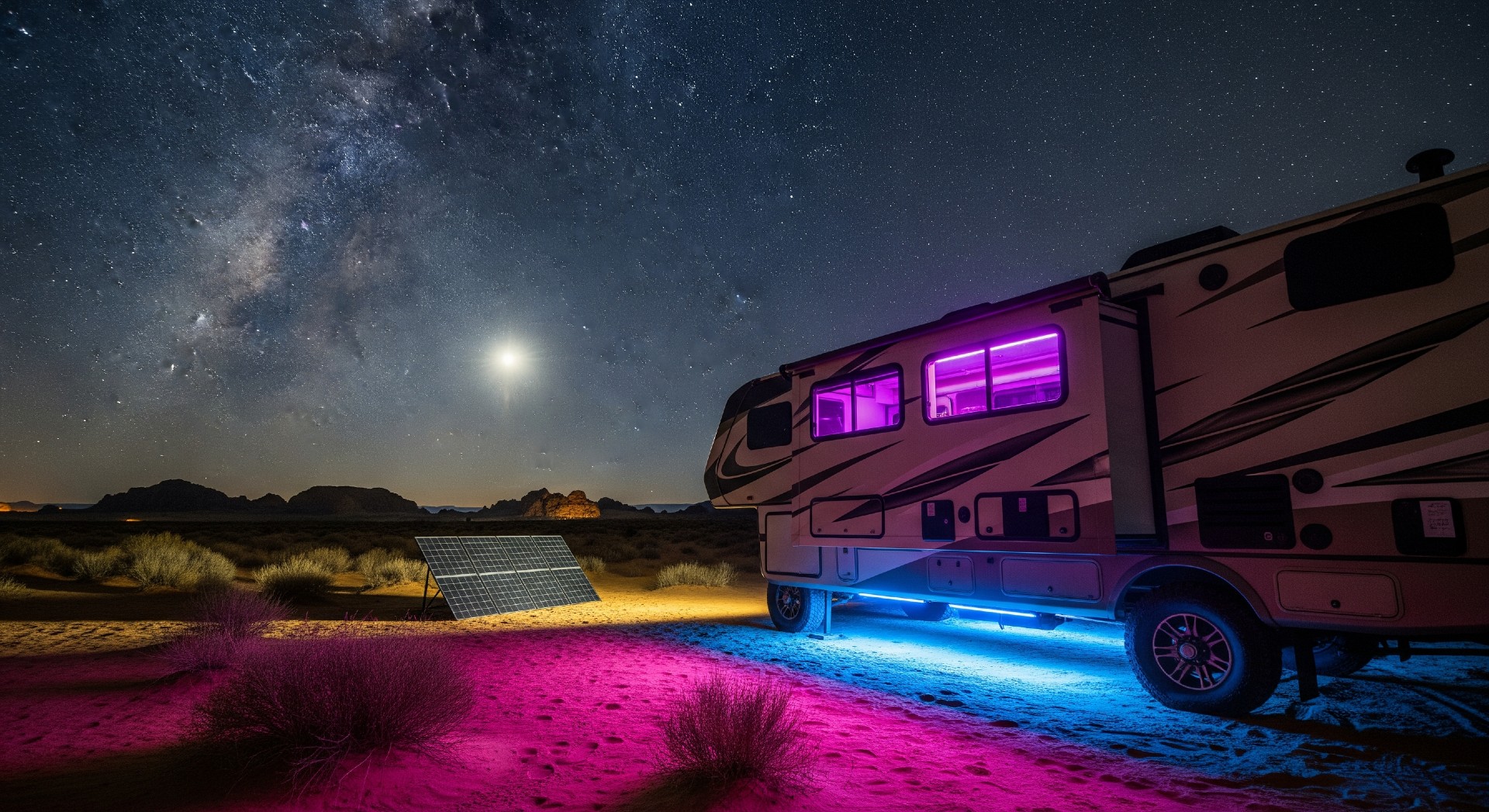
Pairing your lighting with the right energy storage is where Nextum Shop expertise truly shines. If you are running an off-grid cabin or an RV, we recommend connecting your 12V RGB systems directly to a LiFePO4 battery bank rather than through an inverter to avoid conversion losses. A 100Ah LiFePO4 battery can theoretically power a standard 72W RGB strip for over 15 hours at 100% brightness. However, utilizing a PWM (Pulse Width Modulation) dimmer or a smart controller via WiFi or Zigbee allows you to reduce brightness and significantly extend your energy reserves. For those using solar arrays, we suggest a dedicated 12V DC-to-DC regulator to ensure the LEDs receive a constant voltage even when the solar charge controller is in “boost” or “equalization” mode, which can sometimes exceed 14.4V and damage sensitive LED circuitry.
Designing the complete energy-to-light circuit
To achieve maximum efficiency, we suggest pairing a 200W Monocrystalline solar panel with a 20A MPPT charge controller. This setup ensures that even on overcast days, your 12V 100Ah LiFePO4 battery receives a steady charge. When the sun sets, your RGB system can run at full capacity without straining the cells. Still, we recommend installing a low-voltage disconnect (LVD) to protect your battery’s cycle count if the voltage drops below 10.8V.
Professional hardware recommendations for system longevity
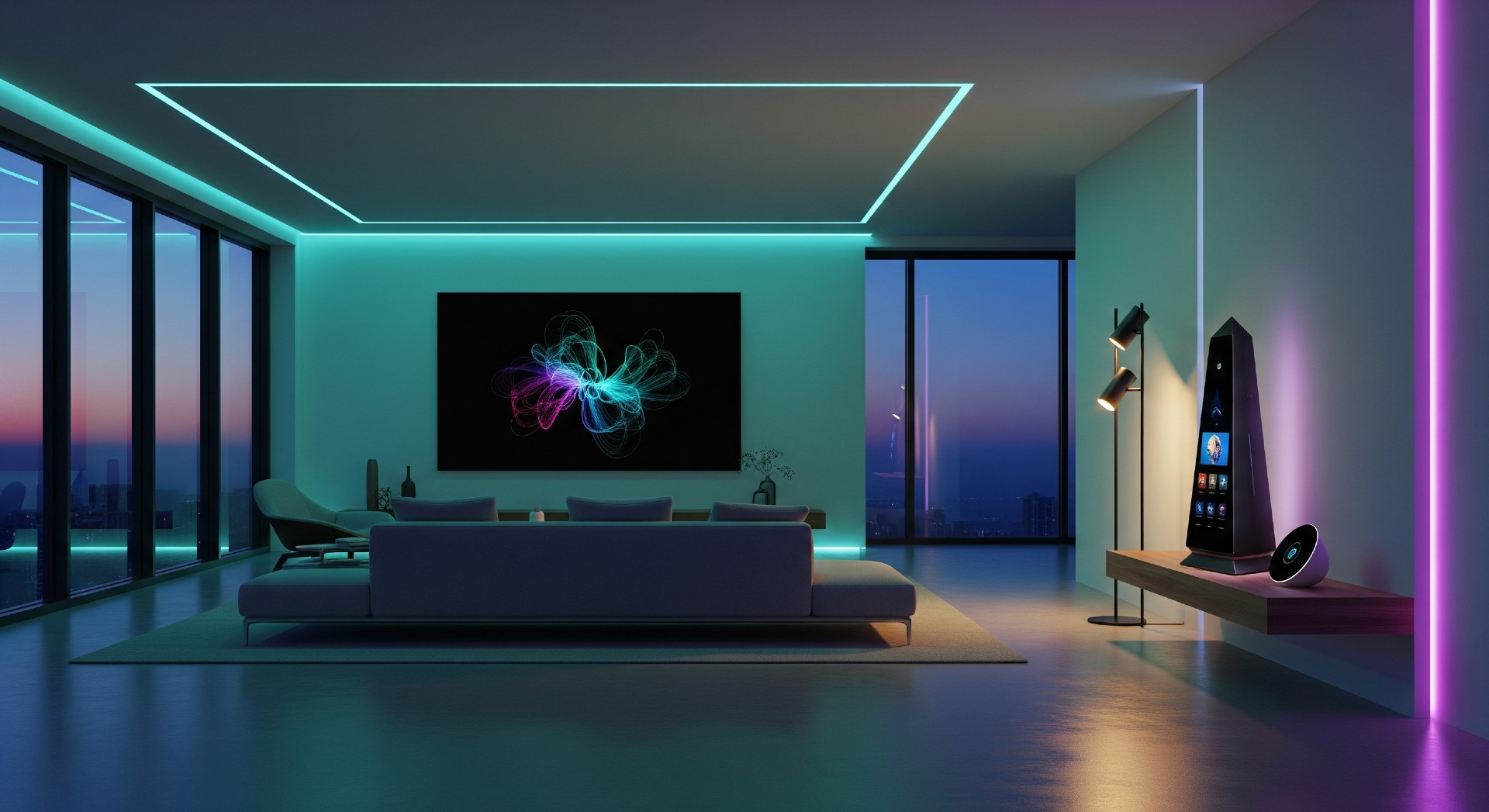
We suggest that users prioritize 24V LED strips for permanent home installations. The higher voltage allows for longer series connections without the need for additional power injection points. If you are installing LED neon flex, ensure you use high-quality aluminum mounting channels. These act as a heat sink, dissipating the thermal energy generated by the chips. Regardless of the installation type, always calculate your wire gauge (AWG) based on the total distance of the run to prevent fire hazards and ensure the color remains consistent from the beginning of the strip to the end.
Optimizing signal integrity in long runs
For addressable systems, the data signal can degrade over long distances. Perhaps you should consider using a signal amplifier or a “null pixel” if your controller is located more than 10 feet from the start of the strip. This ensures your custom lighting patterns remain crisp and free of flicker.